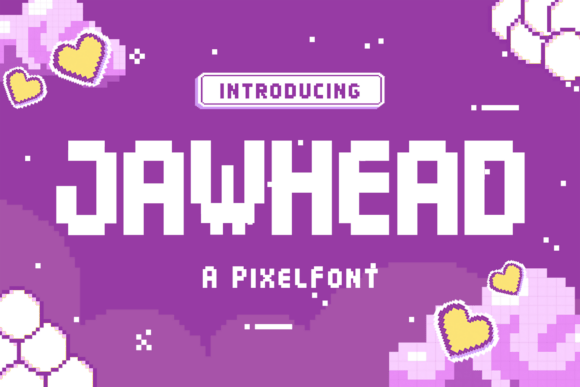
Jawhead: The Pixel Font That Brings Retro Arcade Flair to Modern Design
There's an undeniable charm to the blocky, pixelated characters of classic arcade games. That specific aesthetic, born from the technical constraints of early consoles, now represents a powerful wave of nostalgia and bold, playful energy. If you've ever wanted to capture that feeling in your own projects, a font like Jawhead is your direct line to that era. It’s not just a collection of letters; it’s a carefully crafted typeface built on a clean grid, where each character is designed to deliver the sharp, impactful look of 8-bit and 16-bit typography, but with the clarity and versatility needed for today's design work.
Capturing the 8-Bit Spirit in a Modern Design Asset
Jawhead is a bold pixel display font. What does that mean for you? It means it’s built for headlines, titles, and any text that needs to command attention instantly. The "display" classification tells you it’s optimized for impact at larger sizes, making it ideal for logos, posters, and UI elements rather than body paragraphs. Its visual appeal lies in its authentic retro feel, achieved through a structured, grid-based design. This isn’t a messy or overly stylized script; it’s clean, deliberate, and instantly recognizable as a nod to gaming culture. For a designer or business owner, this clarity is a huge asset—it communicates a specific vibe without sacrificing readability.
Where This Retro Typeface Truly Shines
Thinking about where to use a font like Jawhead is where the fun begins. Its personality is a perfect match for projects that need energy, nostalgia, or a touch of playful rebellion. Consider these practical applications:
- Branding & Logo Design: For a gaming studio, a retro-themed café, a tech startup with a playful side, or a children's educational app, Jawhead can form the core of a memorable logo. It builds immediate brand recognition for an audience that appreciates that aesthetic.
- Packaging & Merchandise: Imagine this font on a bag of artisanal chips, a craft beer label, or the hang tag for a streetwear brand. It adds instant shelf appeal and a fun, approachable quality that makes products stand out.
- Digital & Social Media: Use it for YouTube thumbnails, Instagram story headers, Twitch stream overlays, or podcast artwork. In the fast-scrolling world of social media, a bold, distinctive display font stops thumbs and communicates your channel's theme at a glance.
- Editorial & Web Design: While not for body text, Jawhead is excellent for chapter headings in a zine, pull quotes in a blog about vintage tech, or as a stylized header for a website's "About" or "Games" section.
- Events & Invitations: Planning a gaming tournament, a retro-themed party, or a product launch with a tech angle? Invitations, flyers, and event signage using this font will set the mood before guests even arrive.
Making It Work: Practical Tips for Using Pixel Fonts
Integrating a specialized font like Jawhead into a project requires a bit of strategy to ensure it enhances, rather than overwhelms, your design. Here’s how to approach it effectively:
- Test Your Pairings: A strong display font needs a complementary partner for longer text. Pair Jawhead with a clean, neutral sans-serif font for body copy. A simple, geometric sans-serif will create a pleasing contrast, letting the pixel font shine in headlines while maintaining excellent readability for descriptions or paragraphs. Avoid pairing it with another highly decorative or script font, as this will create visual chaos.
- Prioritize Readability: Always test your chosen font at the actual size and context it will be viewed in. A pixel font might look great on a poster mockup but could become difficult to read at very small sizes on a mobile screen. Use it for short bursts of text—headlines, buttons, labels—where its character is a feature, not a hindrance.
- Explore the Included Styles: A quality font often comes with more than just the basic alphabet. Jawhead includes uppercase, lowercase, numerals, punctuation, and stylized ligatures. Take the time to explore these. The ligatures, for instance, can add unique visual flair to specific letter combinations, giving your typography an extra layer of authenticity and craft.
- Consider Your Audience and Licensing: This font's personality is strong. It will resonate powerfully with a demographic that grew up with Nintendo and Sega, or with anyone who loves indie games and retro culture. Ensure that vibe aligns with your brand's voice. Furthermore, for any commercial project—whether it's a client logo, merchandise for sale, or a paid digital product—always verify the font's licensing. Using a premium, properly licensed font protects you legally and supports the designers who create these valuable assets.
More Than Just a Nostalgia Trip
While its roots are in retro gaming, Jawhead's utility in modern design is broad. It's a tool for visual consistency, helping a brand or project maintain a cohesive look across various touchpoints. Its distinctive style boosts brand recognition—people will remember the unique typography. In a landscape saturated with generic serif and sans-serif options, choosing a characterful display font like this is a strategic decision. It shows intentionality and helps craft a professional presentation that engages an audience on an emotional level, tapping into shared cultural memories and the universal appeal of well-crafted, bold design.
Ultimately, selecting a typeface is about finding the right voice for your message. If your project's voice is energetic, nostalgic, bold, or playful, Jawhead offers a direct and authentic way to express it. It’s a versatile piece in any designer's toolkit, capable of transforming a standard layout into something with personality and punch, proving that sometimes, the best inspiration comes from looking back to move forward.